How to feed Aphaenogaster senilis
Aphaenogaster senilis is a long-legged black ant from the western Mediterranean (Iberia, southern France, North Africa). It is omnivorous, collecting dead insects and a few seeds. New colonies form by fission (a queen leaves with workers): lone founding queens are not available, you buy a colony with workers.
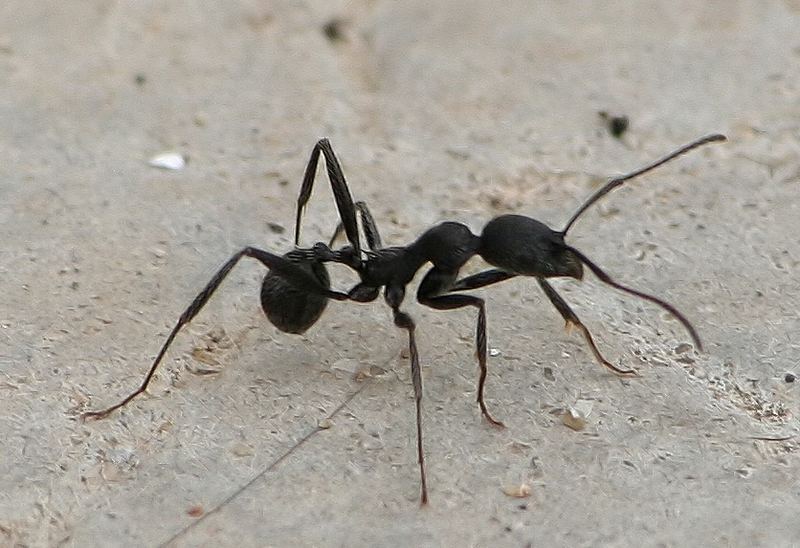

What does Aphaenogaster senilis eat?
- Protein: dead or chopped insects (crickets, mealworms) are the main food.
- Seeds: a few small seeds (chia, millet) as a supplement.
- Sugar: sugar water or diluted honey, in small amounts.
How much to feed
Guidelines for a colony with a moderate amount of brood, at 22–28 °C (72–82 °F):
| WORKERS | PROTEIN | SUGAR / 3–4 DAYS | SEEDS |
|---|---|---|---|
| 10 (Nanitics) | 1 prey item every 5 days | 1 drop | ≈ 2 seeds (0.01 g) / week |
| 50 (Small) | 5 prey items every 4 days | 2 drops | ≈ 3 seeds (0.02 g) / week |
| 150 (Growing) | 14 prey items every 3 days | 5 drops | ≈ 12 seeds (0.07 g) / week |
| 400 (Established) | 34 prey items every 3 days | 13 drops | ≈ 33 seeds (0.2 g) / week |
1 prey item = one insect the size of a fruit fly (2–3 mm). A medium cricket (1 cm) is worth about 50 prey items. 1 drop ≈ 0.05 mL. Seeds: 1 g ≈ 170 millet seeds ≈ 750 chia seeds; 1 teaspoon ≈ 4 g.
These are starting points. If food is left after 24 h, give less; if everything disappears fast and the brood grows, give more. The calculator also adjusts for brood and temperature.
Hibernation
Mild winter rest from December to February, around 12–15 °C.
Common mistakes
- Hibernating too cold or too long: a mild rest is enough.
- Hibernating too cold: it is a Mediterranean species.
- Leaving prey leftovers: remove them after 24 h.
FAQ
Can I buy a lone Aphaenogaster senilis queen?
No: the species reproduces by fission, so you buy a colony with workers.
Does Aphaenogaster senilis eat seeds?
A little, as a supplement to insects.
How often should I feed it?
Protein every 3–5 days, sugar and seeds always available.
Amounts and timings are average guidelines, not rules. Always adjust to what you see in your own colony (leftovers, appetite, brood).