How to feed Camponotus
Camponotus are large ants, often active at night. They grow slowly at first, then their needs rise quickly.
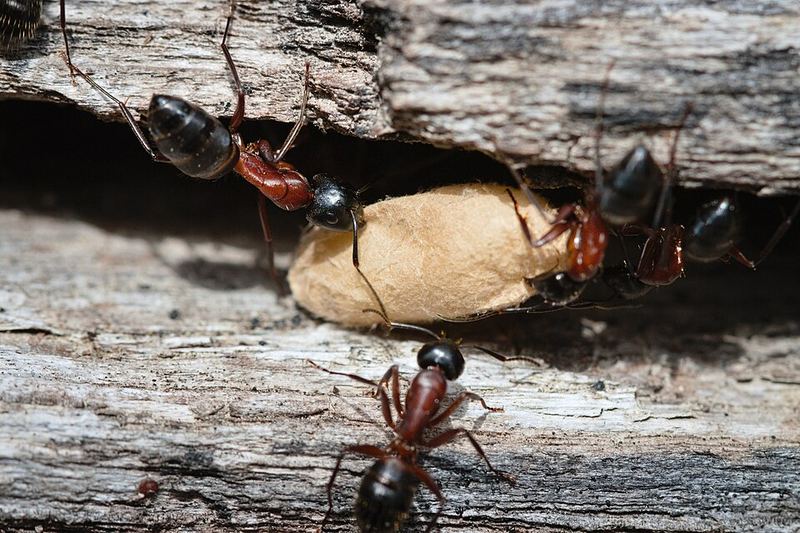

What does Camponotus eat?
- Protein: crickets, roaches, flies. Major workers accept larger prey.
- Sugar: high needs: diluted honey or sugar water available at all times.
- Tip: feed in the evening, when they are most active.
How much to feed
Guidelines for a colony with a moderate amount of brood, at 22–28 °C (72–82 °F):
| WORKERS | PROTEIN | SUGAR / 3–4 DAYS |
|---|---|---|
| 10 (Nanitics) | 1 prey item every 5 days | 1 drop |
| 50 (Small) | 5 prey items every 4 days | 2 drops |
| 150 (Growing) | 16 prey items every 3 days | 7 drops |
| 400 (Established) | 40 prey items every 3 days | 18 drops |
1 prey item = one insect the size of a fruit fly (2–3 mm). A medium cricket (1 cm) is worth about 50 prey items. 1 drop ≈ 0.05 mL.
These are starting points. If food is left after 24 h, give less; if everything disappears fast and the brood grows, give more. The calculator also adjusts for brood and temperature.
Hibernation
Northern and central European species (C. ligniperda, C. vagus): November to March, 5–10 °C. Mediterranean species (C. cruentatus, C. barbaricus): light hibernation December to February, 10–12 °C. Tropical species (C. nicobarensis…) must not be hibernated. North American species such as C. pennsylvanicus need a temperate hibernation too.
Common mistakes
- Worrying about slow growth in the first year: it is normal for Camponotus.
- Hibernating a tropical species: check where your species comes from first.
- Letting the sugar run out: they use a lot of it.
FAQ
Do carpenter ants eat wood?
No. They dig into wood to nest but do not eat it.
How often should I feed Camponotus?
Protein every 3 to 5 days, sugar at all times.
Why is my Camponotus colony growing so slowly?
It is typical of the genus: the first year often ends with fewer than 20 workers.
Amounts and timings are average guidelines, not rules. Always adjust to what you see in your own colony (leftovers, appetite, brood).