How to feed Messor barbarus
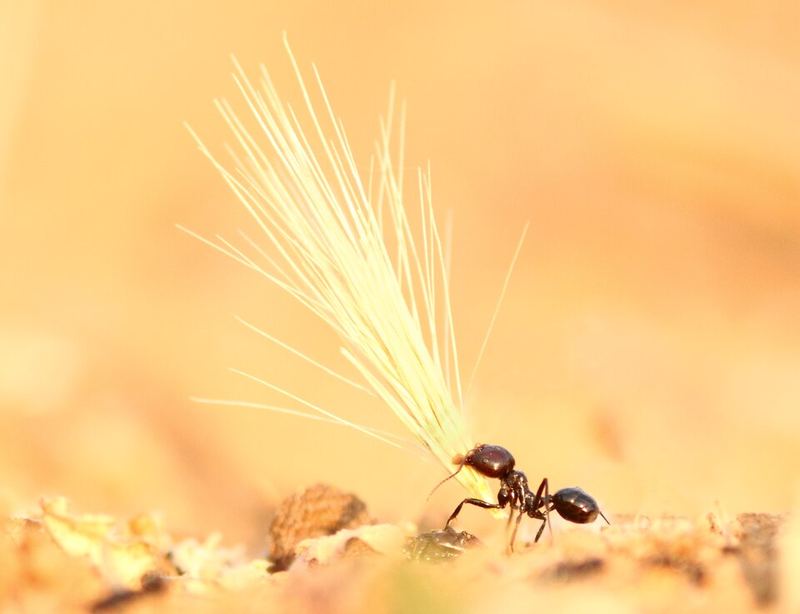
Messor barbarus is a harvester ant: it collects seeds and stores them in granaries. Its diet is very different from most other species.
Recommended for beginners
What does Messor barbarus eat?
- Seeds (main diet): dandelion, chia, millet, flax, daisy, clover. Vary the seeds and keep only a small stock (about 1 seed per 5–10 workers), topped up as it is used.
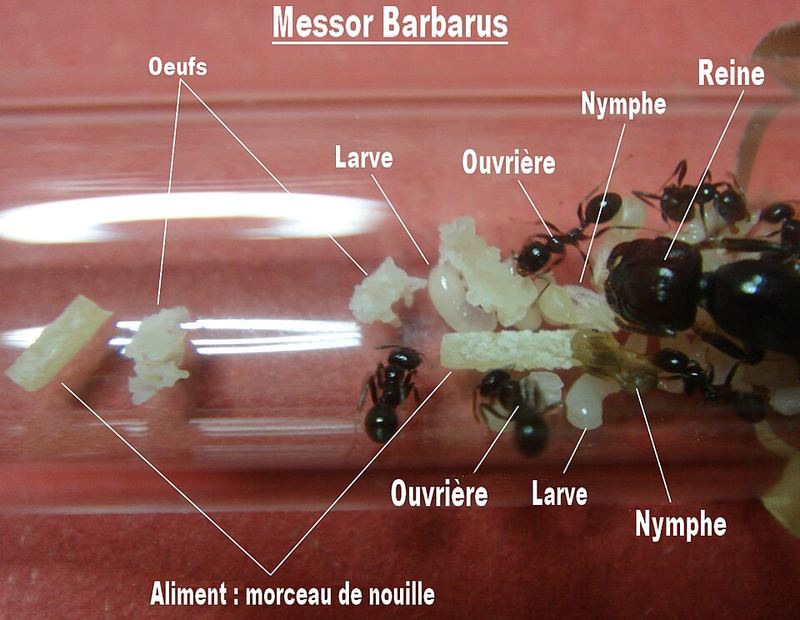
- Protein: a few insects (crickets, superworms) once a week is enough, a bit more in spring when there is lots of brood.
- Sugar: not very useful; a little sugar water now and then is enough.

How much to feed
Guidelines for a colony with a moderate amount of brood, at 22–28 °C (72–82 °F):
| WORKERS | PROTEIN | SUGAR / 3–4 DAYS | SEEDS |
|---|---|---|---|
| 10 (Nanitics) | 1 prey item every 5 days | 1 drop (optional) | ≈ 3 seeds (0.02 g) / week |
| 50 (Small) | 2 prey items every 4 days | 1 drop (optional) | ≈ 13 seeds (0.08 g) / week |
| 150 (Growing) | 7 prey items every 7 days | 2 drops (optional) | ≈ 33 seeds (0.2 g) / week |
| 400 (Established) | 17 prey items every 7 days | 4 drops (optional) | ≈ 100 seeds (0.6 g) / week |
1 prey item = one insect the size of a fruit fly (2–3 mm). A medium cricket (1 cm) is worth about 50 prey items. 1 drop ≈ 0.05 mL. Seeds: 1 g ≈ 170 millet seeds ≈ 750 chia seeds; 1 teaspoon ≈ 4 g.
These are starting points. If food is left after 24 h, give less; if everything disappears fast and the brood grows, give more. The calculator also adjusts for brood and temperature.
Hibernation
Mild winter rest from November to February, at 10–15 °C (50–59 °F). Lower the temperature gradually and keep the seeds dry.
Common mistakes
- Giving treated or coated seeds (garden-centre seeds): they are toxic.
- Forgetting humidity: seeds must be stored dry, but the nest must not dry out.
- Thinking it needs no protein: without insects, the brood develops poorly.
FAQ
What seeds should I give Messor barbarus?
Dandelion, chia, millet, flax, clover, daisy. Untreated seeds, as varied as possible.
Does Messor barbarus need insects?
Yes, in small amounts, especially when there are lots of larvae.
How many seeds per week?
About 0.16 g per 100 workers a week, i.e. around thirty millet seeds (≈ 1 seed per worker per month). Keep a small stock (about 1 seed per 5–10 workers) and remove seeds that go mouldy: too large a stock encourages mould.
Amounts and timings are average guidelines, not rules. Always adjust to what you see in your own colony (leftovers, appetite, brood).