Mold in the nest: what to do?
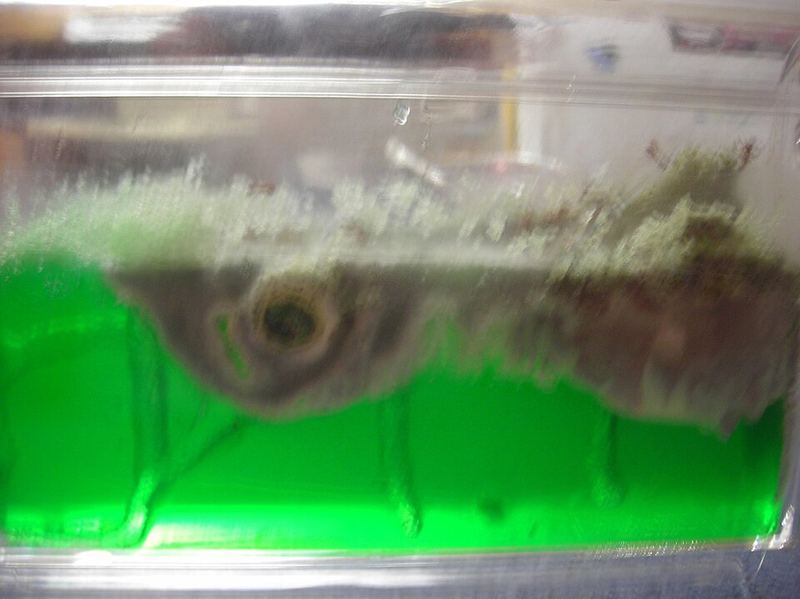
A little mold in a tube or nest is common and rarely an emergency. What matters is knowing where it comes from, and acting before it spreads into the colony’s space.
.jpg)
Where does mold come from?
- Food leftovers: uneaten prey, honey drops, damp seeds. This is the most common cause.
- The ants’ trash corner: they pile waste and dead ants in one corner. In a nest that is too big, that corner is inside.
- Too much moisture and too little airflow, especially in a closed tube or an over-wet plaster nest.
- The tube’s cotton, which always ends up moldy over time.
Is it serious?
A small patch on leftover prey or on the cotton, away from the ants: no emergency. The ants avoid it or wall it off.
Act when the mold spreads towards where the colony lives, covers the brood, or when the tube’s water is also nearly gone.
What to do
- Remove the source: take out leftovers with fine tweezers, and only feed small amounts from now on, leftovers removed after 24 h.
- Moldy tube: place a fresh tube (clean water and cotton) against the opening of the old one, in the dark, and let the colony move on its own. A little warmth or light on the old tube can encourage them. It may take a few days.
- Moldy nest: clean the reachable areas without taking the nest apart. Water less if the nest is too damp.
- Never spray any product (bleach, alcohol, antifungal) near the ants.
Keeping it from coming back
- Feed little and often, and remove leftovers.
- Put food in the outworld, not in the nest.
- A nest sized to the colony: no empty chamber that becomes a trash pile.
- Some airflow, and a nest damp on one side only.
Some keepers add springtails or isopods to the outworld to eat waste. It works with some species, but other ants eat them: test with care.
Frequently asked questions
Is white mold dangerous for ants?
Not right away if it stays away from the colony. Act if it spreads towards the ants or the brood.
How do I replace a moldy test tube?
Place a fresh, clean, water-filled tube against the opening of the old one, in the dark, and let the ants move on their own.
Can I use an antifungal?
No: chemicals near the ants can kill the colony. Remove the cause instead (leftovers, excess moisture).
Amounts and timings are average guidelines, not rules. Always adjust to what you see in your own colony (leftovers, appetite, brood).