How to feed Pogonomyrmex occidentalis
Pogonomyrmex occidentalis is a harvester ant from the western US with a very painful sting. It mostly eats seeds, which it stores in the nest, plus a few insects for the brood. Sugar is only a side food.
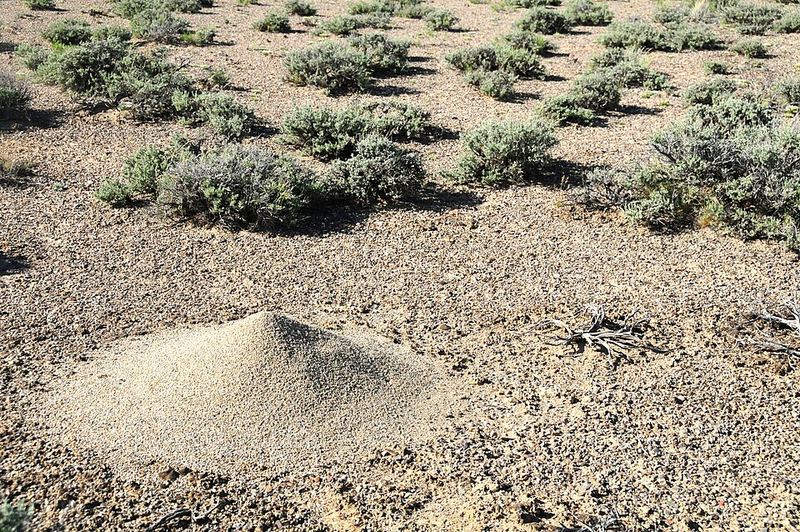

What does Pogonomyrmex occidentalis eat?
- Seeds (main food): untreated millet, chia or dandelion seeds, in small amounts refreshed weekly.
- Protein: a few insects (cricket pieces, mealworms) once a week for the brood.
- Sugar: optional, a drop of diluted honey now and then.
- Tip: remove moldy seeds and keep the nest fairly dry.
How much to feed
Guidelines for a colony with a moderate amount of brood, at 22–28 °C (72–82 °F):
| WORKERS | PROTEIN | SUGAR / 3–4 DAYS | SEEDS |
|---|---|---|---|
| 10 (Nanitics) | 1 prey item every 5 days | 1 drop (optional) | ≈ 3 seeds (0.02 g) / week |
| 50 (Small) | 3 prey items every 4 days | 1 drop (optional) | ≈ 13 seeds (0.08 g) / week |
| 150 (Growing) | 9 prey items every 7 days | 2 drops (optional) | ≈ 33 seeds (0.2 g) / week |
| 400 (Established) | 22 prey items every 7 days | 4 drops (optional) | ≈ 100 seeds (0.6 g) / week |
1 prey item = one insect the size of a fruit fly (2–3 mm). A medium cricket (1 cm) is worth about 50 prey items. 1 drop ≈ 0.05 mL. Seeds: 1 g ≈ 170 millet seeds ≈ 750 chia seeds; 1 teaspoon ≈ 4 g.
These are starting points. If food is left after 24 h, give less; if everything disappears fast and the brood grows, give more. The calculator also adjusts for brood and temperature.
Hibernation
Cool hibernation from October to February, at 5–10 °C. It is part of its cycle.
Common mistakes
- Giving too much sugar: it is a seed eater, not a sugar feeder.
- Keeping the nest too humid: the seeds go moldy.
- Handling it bare-handed: the sting is very painful.
FAQ
What does Pogonomyrmex occidentalis eat?
Mostly untreated seeds (millet, chia, dandelion), with a few insects for the brood.
How often should I feed it?
Seeds refreshed once a week and insects once a week; sugar is optional.
Does it need hibernation?
Yes: a cool winter rest at 5–10 °C, from October to February.
Amounts and timings are average guidelines, not rules. Always adjust to what you see in your own colony (leftovers, appetite, brood).