Getting started with ants
A queen, a test tube and some patience: that is all you need to start. Here are the steps in order, with the mistakes that make most beginners fail.

1. Pick an easy species
Start with a hardy species from your region that is legal where you live:
- Lasius niger: the easiest in Europe, very forgiving.
- Messor barbarus: eats seeds, easy to feed, but needs more warmth.
- Tetramorium: small, fast-growing.
Never buy an invasive exotic species and never release a colony into the wild: it is illegal in many countries.
2. The minimum setup
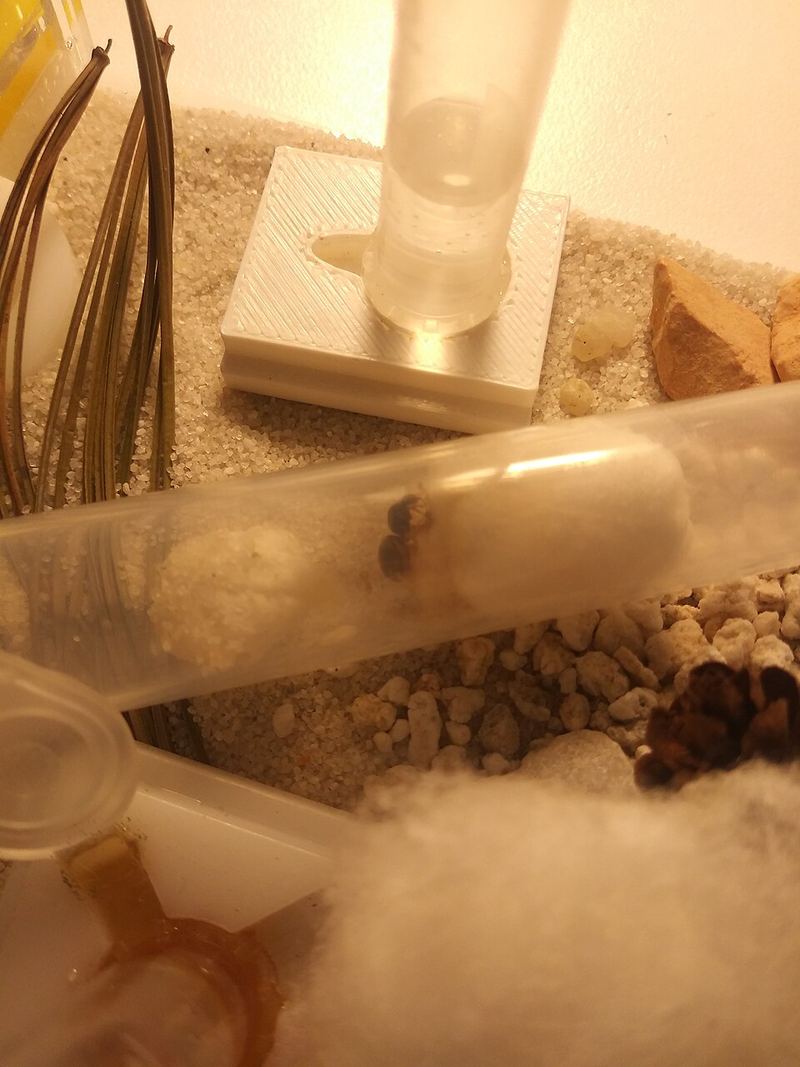
- A test tube (about 16 mm) with water at the bottom, held back by cotton. This is the first nest.
- A small box to hold the tube, later connected to an outworld.
- An escape barrier on the outworld rim (paraffin oil, talc or a dedicated product).
The big nest comes later: a nest that is too big at first turns into a trash pile and gets moldy.
3. Founding: do not disturb
In many species (including Lasius niger and Messor), the queen founds alone and does not eat: she lives on her reserves until the first workers. Keep the tube quiet, dark, at 22–26 °C, and check it as little as possible. The first workers usually arrive after 6–10 weeks depending on species and temperature.
Exception: Myrmica queens and some other species must be fed during founding. Check your species guide.
4. Feeding the first workers
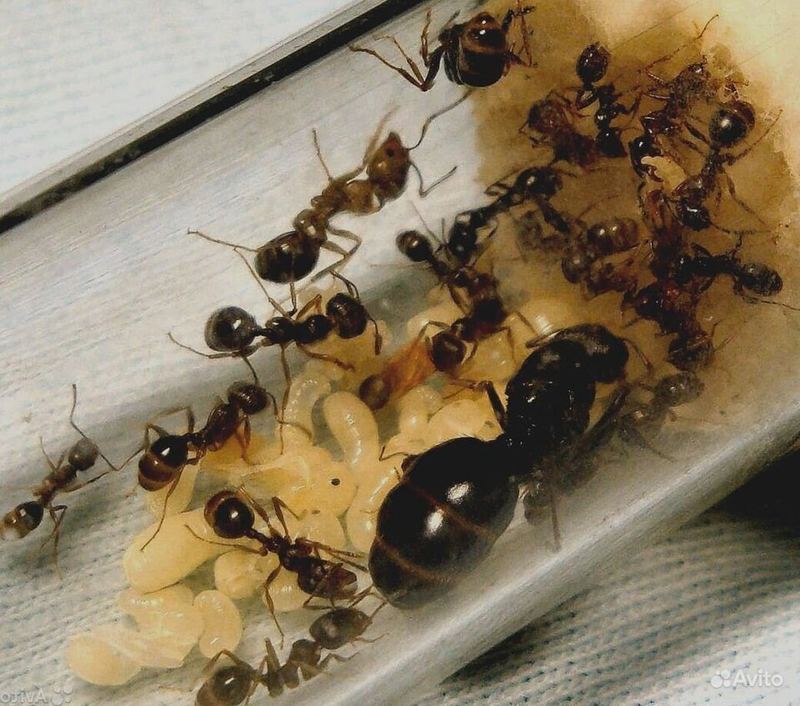
Once the first workers appear: a little sugar water and a small prey (a fruit fly, a piece of cricket). Remove leftovers after 24 h. For exact amounts by colony size, use the calculator.

5. Plan the hibernation
European species need a cool winter. Without it, the queen wears out. The hibernation calculator gives you the dates by species.
Mistakes that make colonies fail
- Opening the tube or moving the queen during founding.
- Overfeeding: leftovers go moldy.
- A nest that is too big too early.
- Leaving the tube in direct sun or near a radiator.
- Forgetting the water: a tube that dries out kills the colony.
Frequently asked questions
What is the easiest ant for beginners?
Lasius niger in Europe: hardy, common and forgiving of beginner mistakes.
Should I feed a lone queen?
Not in claustral species such as Lasius niger or Messor: she lives on her reserves. Some species, such as Myrmica, must be fed.
When should I move ants into a nest?
Not before the tube is full or failing (mold, water almost gone). Then connect the new nest to the tube and let them move on their own.
Amounts and timings are average guidelines, not rules. Always adjust to what you see in your own colony (leftovers, appetite, brood).